Friday, November 12, 2010

Beautiful Light

I don't think it's really fair to talk about "beautiful light" as a standard that I hold across the board. For me, it's more about the marriage of the style and the content of the story that creates something beautiful. Sometimes that can be a more traditionally "beautiful" sometimes it's pretty darn ugly "Winter's Bone". So I'll just move through some movies that I've seen lately where the cinematography and story seemed all of one piece.


"Days of Heaven" - Directed by Terrence Malick, cinematography by Nestor Almendros

The whole movie is pretty much a moving painting. It's a powerhouse of composition and beautiful natural light that feels completely at home in story of time and place. If you've never seen, netflix it. It's amazing.


"Where the Wild Things Are" - Directed by Spike Jonze, cinematography by Lance Acord

Okay, must people were really let down by this movie, but I loved it. It's an unusual movie that wasn't the happy childhood adventure that most people thought it would be. It works pretty much exclusively on an emotional level. The visuals are a huge part of that. The images are at times as sparse and simple as the plot and at others, they're soaked with as much melancholy sadness as the frustrated monsters who inhabit them. The ending with Carol walking into the water is heartbreaking.


"Winter's Bone" - Directed by Debra Granik, cinematography by Michael McDonough

It's hard to find an "beautiful" images from this movie, but the cinematography is so affecting and complimentary that it elevated the movie higher in my book. I have a lot of respect for movies like this and "The Wrestler" that really commit to the truth of the story. The movie takes place the meth-ravaged, Ozarks. It's an ugly place filled with a lot of ugly characters, and the cinematography never makes an attempts to hide that. I told someone after the movie that I didn't really know whether I "liked" the movie (I thought it was great, but it's so bleak that it's hard to "like") and I told them I didn't know. But I did say that anytime a movie feels so real that you feel like you can smell it and touch it, that's a pretty big feat. It's definitely the case here, thanks in part to the excellent cinematography to compliment the great writing, directing, and casting.


Image

"Persona" - Directed by Ingmar Bergman, cinematography by Sven Nkvist.
I had a lot of  fun shooting in black and white on Hamilton's project. It's really a different approach. The challenge is in creating contrast between the tones, whereas in color you can get your separation through color. I really love this still for it's intensity in the contrasted foreground against the extremely flat background.


"Punch-Drunk Love" - Directed by PT Anderson, cinematography by Robert Elswitt
The color palette is such an important part of the beauty and meaning in the film


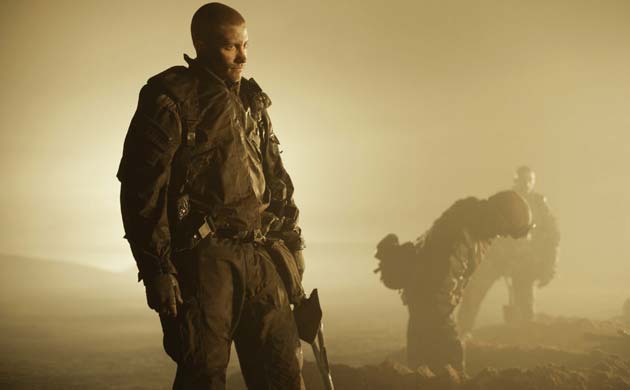
"Jarhead" - Directed by Sam Mendez. Really beautiful contrast and handheld camera work throughout.


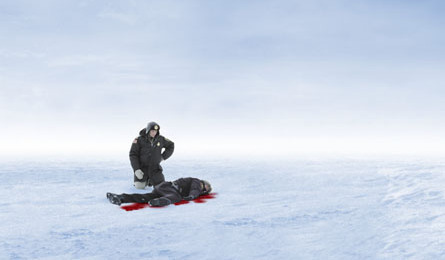
"The Man Who Wasn't There"


"A Serious Man" - Directed by the Coen Brothers. This movie is full of the kind of some really great understated cinematography. 


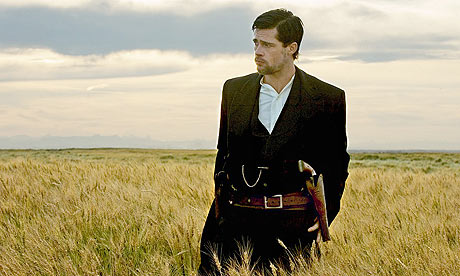
"The Assassination of Jesse James by the Coward Robert Ford" - Directed by Andrew Dominik


Roger Deakins, ASC, BSC, bad-ass

I'm going to give Roger his own section of the post. He's also sure to reappear in my upcoming favorite cinematographer post. His name alone is enough to get me to watch a movie, and it doesn't hurt that he's the Coen Brother's go-to cinematographer.

Wednesday, October 13, 2010

"No Country for Old Men" - Bell's return to the hotel.

"No Country for Old Men"
directed by Joel & Ethan Coen
photographed by Roger Deakins, ASC, BSC

I'll come back and drop in the screenshots later...

The first shot here is through the windshield of Sheriff Ed Tom Bell's squad car as returns the scene of Moss's murder.  It's a simple establishing shot that tells us not only that we're returning to the hotel room, but that this scene will play out from Bell's perspective. As the scene unfolds, this simple idea that we are experiencing this through Bell's eyes is very important.


Here we see Bell for the first time in a close-up. You can feel the tension and anxiety in his face


Now we return to Bell's POV. Clearly the anxiety in Bell's expression is related to returning to the hotel room, and this shot only brings us closer into that fear.


Again to Bell's face as he stops in front of the hotel. Bell briefly pauses then exhales before exiting the car. There's nothing that exciting about the shot itself, but I think it's important to note that sometimes the best thing a shot can do is not distract from the performance. We don't need any bells and whistles here, the pause and expression from Jones are strong enough to be left alone


Bell steps out of the cruiser and begins his walk toward the door. Deakins frames Bell in a cowboy shot as he exits the cruiser and we end up in more of a traditional medium shot as he walks toward the door. I like that choice because it reiterates the western feel of this movie and reminds us of Bell's position as a law man. Although the color scheme here is not particularly pertinent to meaning of this scene, Deakins does a remarkable job of maintaining a consistent color scheme of blueish /cyans and different shades of yellow. Not only do these colors suit the West Texas landscape and period well, but in color theory, they make one of the most appealing color pairings. Here those colors are incorporated through different colors of street lights.


Now we have a slow dolly towards the doorway as Bell's shadow from the headlights are cast against the door. The color scheme is again reiterated through the yellow police tape and teal door.


Medium CU on Bell


Back to our dolly shot as Bell enters frame.


We get a MCU profile here as Bell comes up to the door. I suspect this is not only to vary or shot selection, which up until now has been mostly shot/counter shot, but to also show Bell literally coming up against his fears about what waits inside.


The XCU of a blown lock only heightens Bell's suspicions about what's inside the hotel room


The reverse of the previous shot shows Bell in a low angle CU. The headlights and flood light illuminating the hallway form add some kick light around Bell's figure. It's a very low-key scheme that adds to the intensity 

Lock again. Tensions building.


Now we see for the first time, at least partially, what's inside the hotel room. In the mostly dark frame, orange light spills through the blown door lock and a sliver of light slashes across Chigurh's face. The suggestion is one of uncertainty. To me, the shot is about how our worst fears tend to lurk out in the darkness. I think it's important to remember that we're experiencing the scene from Bell's POV. So are we as viewers simply being privileged to information that Bell is not, or are we seeing Bell's imagination about what's inside? It's one of the more ambiguous aspects in an otherwise very literal movie. I also think that the orange light in the dark room could provide some clues. This image is later described by Bell in a dream he has about his father at the end of the movie, "an orange light out there in all that darkness"


Back to Bell in a CU. As he makes his decision, his narration from the beginning of the film comes to mind. "It's not that I'm afraid of it. I always knew you had to be willing to do to even do this job - not to be glorious. But I don't want to push my chips forward and go out and meet something that I don't understand. A man would have to put his soul at hazard. He's have to say, 'Okay, I'll be a part of this world.'" This is literally that moment, Bell accepts his fate regardless of its relevance in the world. He draws his gun, and pushes his chips forward.


Bust shot of Chigurh.


XCU on the light spilling through the hole in the door.

As Bell pushes the door open, we cut to a reverse wide shot from inside the hotel room. The door swings open against the wall where Chigurh was presumably hiding. This is where the element of uncertainty really starts to become a factor. Was he or wasn't he there? Light spills in across the dark room and Bell is seen silhouetted by his headlights. 

We cut to a CU of Bell as we surveys the room. The light in this scene in beautiful in its own right, but what I love so much about Roger Deakins is that you never call into question the authenticity of his sources. The light is always motivated, by the headlights in the this case.

Now we have a slow pan across the room from Bell's POV. Again, the motivated light is actually used to enhance the story. The two headlights from the squad car, cast broken shadows across the room; it's a subtle suggestion of Bell's troubled mindset.

Bell looks down and notices...

...the blood stain on the carpet. The decision to include a cutaway of Bell stepping over the blood stain speaks to his character and his aversion to violence around him.

In a back quarter profile, we follow Bell as he walks through the light from the doorway into the darkness again. We still haven't seen Chigurh, but all of the darkness and shadow suggest that he could be anywhere. With his gun drawn he flips on the bathroom light. He stops and looks down.

The XCU on the window locked still locked. There's a nice balance in the film of simple shots like these (POV's, cutaways, ect) that together tell us exactly what's going from the practical action to the more complex character thoughts. Even without dialogue, we  can gather that Bell inspected and decided that no one has left the room. "Show, don't tell"

Low angle wide shot as Bell reemerges and cross through an eerie mix of hotel tungsten lights and outside moonlight.

Again through shot/ counter-shot we can gather what's running through Bell's mind. He sees the screws on the ground and seems bewildered. Bell's gamble may not have cost him his life, but he has ultimately met something beyond his understanding. The CU of the screw on the beige carpet dissolve into the similarly beige Texas landscape. It's one of the only non-cheesey cross dissolves I've ever seen, and I think it works for two reasons: 1) Color and texture are both carefully matched so that the dissolve is so subtle we barely notice it's happening 2) Thematically, the end of the scene ends with Bell in bewilderment of what he's experienced. This feeds right into the next scene where Bell visits an old friend to discuss the changing times.


-Henry


Wednesday, September 29, 2010

Growing Pains

Robert Rodriguez says everyone has about 20 really bad ideas to get out of their system before they start producing consistently good work. I've got a poop-ton more than 20 bad ideas, but the point still applies

Making turds is part of "the process" (I'm big on Saban-isms).

My main problem?

... I did not approach this project with a story first mentality. That's a pretty big problem. There are some good shots throughout and some nifty edits in a few spots, but it's a crutch. My project does not stand on it's own as a story.

Why?

...Because I never filled my role as a director for the project. Instead, I drew David a lot of storyboards and gave him a rough shotlist. That's all fine, but I never discussed a "story" with him. I never sat down and said, "Hey David, I've got this really cool idea for how to tell a story about this football game". How can I reasonably expect him to deliver me the shots that tell a story if I never told him the story to begin with? He did a great job with what I gave him, and after editing we talked about ways to improve for next time. That's what I love about David. Before, during, and after every shoot, he wants to know one thing, "How can I make it better?"

As a result of laziness on the front end, I tried (poorly) to cobble together a story for the project in the editing lab. Projects shouldn't be directed in the editing lab, and that's what I did with this one. Bottom line.

-Henry

Tuesday, September 21, 2010

Portrait of Place

Tuscaloosa County vs. Hillcrest. Vimeo has been giving me a ton of trouble in the last 24 hours, and for some reason the embed code won't post. Here's the link...

http://vimeo.com/15152651

Sunday, September 19, 2010

Sony vs. JVC

I'm not even going to pretend like I have a hard time picking which camera I like better. I'll take the Sony hands down over the JVC. That doesn't it's actually better, I just prefer it.

The two cameras are fairly similar in terms of performance. So I think that the biggest thing when comparing two similar cameras is comfort and how well you know one over the other. Pretty much everything I've shot in the last year has been on the Sony, and I feel like I've gotten to a point where I know how to max its potential. I haven't shot with the JVC nearly as much, but I'm sure if I shot with it I'd feel equally as comfortable.

Low Light
It seems to perform a wee bit better than the Sony in low light. Neither do extremely well, but the noise structure on the JVC seems a little more organic - it actually looks a little bit like film grain. The Sony's noise structure is pretty lousy. I've got away with 6db or maybe even 9db once or twice when I was shooting stuff for Documenting Justice last year, but if you have to bump it past 15db it's going to be poop.

Function & Ease of Navigation
The Sony has it's share of quirks (some settings always seem to reset themselves on the Sony), but for me, the JVC is really a pain to navigate and operate. The white balance seems to be much quicker on the Sony, and I love the variations on the white balance presets. You can scroll between -8 & +8 for any white balance preset to cool or warm the image. It's great for documentary or something fast paced where you're dealing with constantly changing lights. I can just hit the presets and scroll around until I get a workable color temperature. And last but not least: 2 barrels vs 1 barrel...I think we all know which one is better (it's 2)

Tape vs. JVC
I'll call this one a draw. A card workflow as opposed to a tape workflow sounds too good be true, and for me, it kind of is. I don't like the paranoia of my media disappearing forever after I wipe the card. We all know drives can and do fail. So it's nice to have he backup of a tape. The tape workflow can also be a great advantage to an editor. The log and capture process really allows you to make notes that help the editing. With that being said, tapes are kind of a pain in the ass. They're expensive, they drop frames, decks tend to eat them, and the workflow is slower.

Image quality
I'll throw this out there - I don't actually know anything about the technological side of image specs. It's gibberish to me. However, under the ol' eyeball test, I'd go with Sony. The sony captures does well with color preservation. The JVC image always looks kind of flat and muddy to me. That probably has more to do with having used it a lot though.

In the end, you're the one that's gotta shoot with it. Grab whatever's most comfortable.

Wednesday, September 1, 2010

When I Grow Up...I Want to Jroll

I'll start off by saying that my "a" key on my computer is not doing so hot these days. I really have to give it a good mashin' for it to register. It's strange to think about but it really takes you out of a rhythm while writing..erm, typing. When I write, things usually start out pretty mechanically - it's the cadence of thoughts beginning to stir. Things start out in more of a pecking manner and then eventually evolve into machine gun stacatto. Hearing that steady click of the keys keeps me going. It gets me in the zone and I don't really have to think about anything. Unfortunately, that's not the case tonight. Things are little more measured, and little more stiff, and frankly, it makes me sad.

In first grade our teacher asked us the questions what did we want to be when we grew up. We were given a sheet of paper with "When I grow up..." already printed, and we were supposed to finish the sentence and the draw a picture of our future selves. I wrote in, "I want to jroll". Of course what I meant was that I wanted to "draw" but years of mangled Southern dialect rendered me incapable of "sounding out" the words I didn't know how to spell. Anyone may have look at that sentence thought, "Man, this kid is dumb as a rock", but I'll be damned if the picture wasn't spot on. Fastforward 14 years...

Hmmm. What do I want to do? I want to work in film as a cinematographer for stories that I'm passionate about. I want to work in commercials. There's so much potential for beauty, inspiration, and creativity in the micro short form. They're so immediate and visceral. Surely we can use the form to a more worthy goal than hawking for people to by boner pills.

Those are the things I would like to do. Here's the more complicated answer about what I will do.

Whenever I ride in cars, particularly on longer trips, I look out the window the most of the time, and if I'm lucky enough, I do so with the windows down. I could drive for hours just looking at the land and listening to the sound of wind. After returning from a trip, people always ask one thing, "What was your favorite part?" A normal response to that may be something a long the lines of a concert, a restaurant, or some kind of destination/ activity/ event. Mine is normlly something like "It was really foggy one day, but the sun started to shine and everything looked really cool." I'm constantly in awe of the complete beauty of the earth and the juxtaposition of the ugliness that often exists in it. It's bittersweet. I experience and understand the world visually, and I want to share it that way as well.

This could, and does, mean a lot of things for my future. But I think accepting this as my understanding of the world and as the catalyst behind what makes me tick a little bit more prepared for the future. I feel more flexible to share this passion in a lot of different capacities.

Cinematography is the most passionate way that I share my understanding of things. I do it other ways too: painting, photography (mostly bad photography), and other hobbies, but cinematography drives me. I like to do it because I feel like that's what I'm supposed to do.

But a man has to eat right? Touche'. I don't want to sit around forever waiting on a golden opportunity to do exactly the thing I want to do. That's dellusional, but it seems to be the shared dellusion of a lot of people, particularly in film. I'll go where I'm needed. Collaboration can be such a disasterous enterprise, usually ending in group apathy or individual domination. I never thought that collaboration would be a strength of mine, but I think over time, that skill set is starting to shape up. I've been blessed with a strong work ethic, and hard workers will never be in short supply. I have no idea where that will take me, but I can only hope and try my best to pursue my passions.

So where does all this hippie mumbo-jumbo fit into our class? Well...

I want to get my hands dirty in 312. It's sad that a discipline as experience oriented as film, our department has really done a pour job of fostering hands-on opportunities for students in the past. I can't wait to get my hands on everything we have. I 5d's, 7d's, Ex3's, Redrocks, Zeiss Primes, flex dolly tracks - it's an exciting time. Even though the tools of film are constantly changing, and learning the specifics of each one is really only usefull from a (relatively) short term viewpoint. Heck, we'll probably be shooting with moon lasers in like two years. The point is, trends come and go, but the field experience and the language we create with the tools (whatever they may be) are essential. They're enduring and invaluable. I feel like 312 can offer me some of those outcomes.

From a more idealistic perspective, there's a really great group of smart, talented, and hard-working people at the heart of the TCF department. Had it not been for students like the ones we have and some equally passionate, hard-working faculty, this department was one jelly donut away from keeling over and dying a horrible, sweaty, bowel empyting death. But it didn't. There's life here yet again, and it's very inspiring. I know one of my goals for the year has been to mobillize the talent outside of class. We're talking, we're sharing, and hopefully we'll start producing some really great stuff outside of class, as well as in it.

I hope that TCF 312 will be an extension of that goal. I want to grab all of the opportunities we have in this class  - the equipment, the readings, the instruction, and the people - and do something awesome with them. In addition to the things we do in here, this class can be launching pad for other projects. I think about 312 as a taste of other things. I don't mean that to undermine the class; I'm certainly going to pour myself into, and I know there will be plently of late nights in Reese Phifer. But I think the best kind of class is the one that inspires you to do it on your own, and I have a good feeling that this class will do that for many.

In other news, here's a short promo Carly and I put together over the weekend for Creative Campus. Take a look and check on their website http://www.creativecampus.ua.edu/

Creative Campus Promo from Henry Busby on Vimeo.


I'll leave you with a song off of Nick Cave's soundtrack for "The Proposition". I've been listening to it a lot the past week. Maybe you'll like it.


Stick a fork in me, I'm done. Goodnight everyone.

-Henry